

Howard Coker | March 20, 2026 | Car Accidents
Drivers face common situations often enough for their responses to become routine. However, unusual situations can leave drivers confused. For example, many drivers forget their driver’s education courses and do not know what to do when they encounter an intersection with flashing lights.
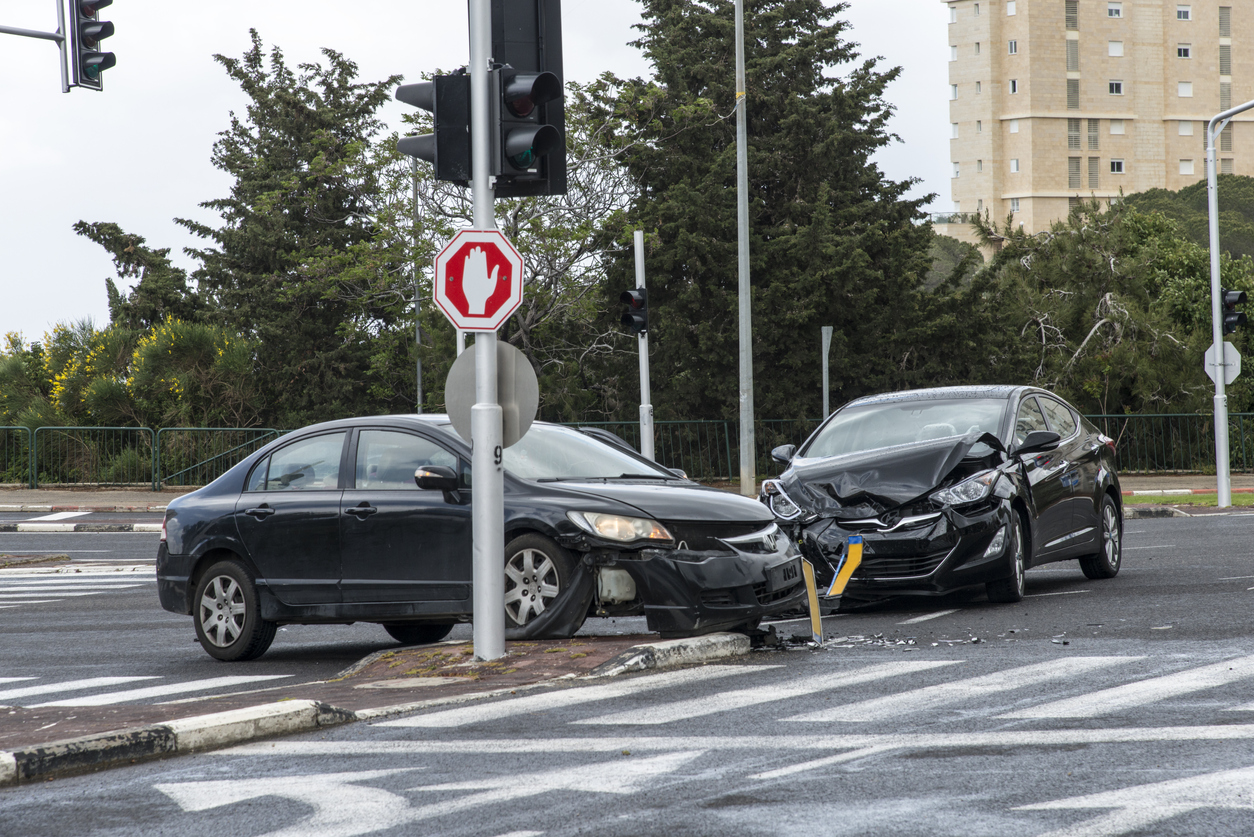
Intersection collisions can be dangerous, particularly when two or more drivers believe they have the right of way and collide at high speeds. Thus, properly navigating flashing lights at an intersection can prevent a serious auto collision.
Why Might Drivers Encounter Flashing Traffic Lights?
Traffic lights flash to attract road users’ attention. Flashing lights simulate movement and, thus, draw the eyes and brain to them.
In Jacksonville, you might routinely see the following types of flashing lights while driving:
- School speed zone signs
- Work zone warning signs
- Emergency vehicle lights
- Railroad crossing signs
In these situations, a flashing red or yellow light typically means drivers must exercise caution and follow instructions.
When Do Intersections Use Flashing Lights?
Intersection signs and signals may include flashing lights under two conditions.
First, traffic signal control boxes are usually designed to flash when an electrical fault occurs. Flashing traffic signals might mean the power is out or that the controller has been disconnected after a car collision.
Second, at uncontrolled intersections and at intersections with signs, flashing lights are usually used to communicate the right-of-way rules to drivers. For example, an intersection controlled with stop signs might have flashing red lights overhead or on the signs.
How to Respond to Flashing Intersection Lights
Florida law tells drivers what to do at an intersection with flashing lights as follows:
Flashing Red Light
Flashing red lights at an intersection require you to stop. This is true whether you see a flashing red traffic signal, a flashing overhead light, or a flashing light on a stop sign.
You must follow the same rules as you would at any controlled intersection. Specifically, you must stop at a stop line. If there is no stop line, you must stop behind the crosswalk. If there is no stop line or crosswalk, you must stop before entering the intersection, but close enough to see cross traffic.
You can proceed according to the normal right-of-way rules. If the intersecting road has no stop sign and no flashing red light, those facing the flashing red light must wait until traffic clears.
Conversely, at intersections with multi-way stops, later-arriving vehicles must yield to those who arrived earlier. If multiple vehicles arrive at the same time, the vehicle on the left must yield to the vehicle on the right.
Flashing Yellow Light
At an intersection, a flashing yellow light means that you must exercise caution. It is not a yield sign. In other words, you are not required to yield to cross-traffic. Instead, you are only required to exercise caution when approaching and proceeding through the intersection.
For example, flashing yellow lights may be used near fire stations. They warn drivers that fire trucks may approach and enter the road with little to no warning.
Intersection Accidents and Flashing Lights
Intersections with flashing lights may be dangerous because drivers may forget how to handle them. Even if you know what to do, your actions may take other drivers by surprise. For example, a driver behind you at a flashing red light may rear-end your vehicle because they do not expect you to stop.
Thus, when you approach these intersections, you should exercise caution and remain aware of the vehicles around you. In addition to reducing the risk of a crash, you will preserve your right to seek compensation by following the rules.
Contact Our Jacksonville Car Accident Attorneys at Coker Law Personal Injury Lawyers for a Free Consultation
If you get into an accident involving flashing lights at an intersection, you need a strong legal advocate on your side to handle your case while you focus on healing. For more information on how we can help, call Coker Law Personal Injury Lawyers to schedule a free consultation with one of our Jacksonville car accident attorneys.
We serve Duval County and its surrounding areas.
Coker Law Personal Injury Lawyers
136 E Bay St #5438
Jacksonville, FL 32202
(904) 356-6071
Find us with our Geo Coordinates: 30.32569719086265, -81.65515220132858

_________________________________________________________________________________________
ABOUT THE AUTHOR

Attorney Howard Coker is the founder of Coker Law Personal Injury Lawyers. A graduate of the University of Florida College of Law, he has dedicated his career to representing individuals in serious personal injury cases. With more than four decades of courtroom experience and over 350 jury trials, Howard is recognized as one of Florida’s top trial attorneys. His commitment to justice ensures every client receives the strong, personalized representation they deserve. Check our recent case results.
Location: Jacksonville, FL